

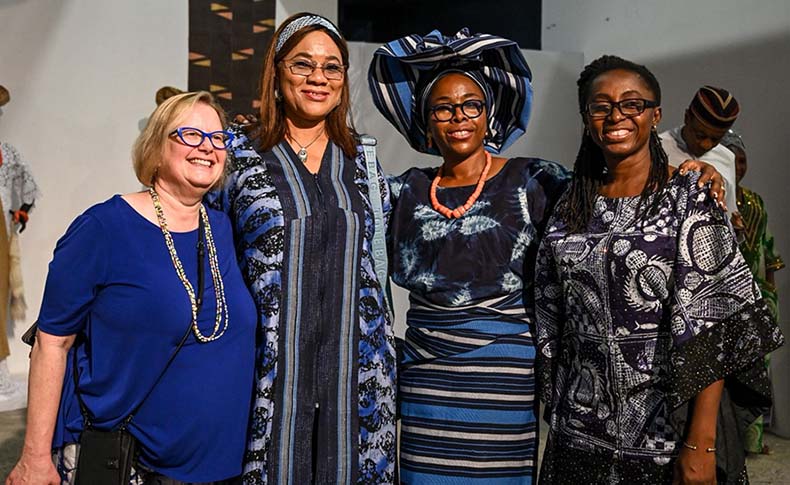
The Lagos Pop-Up Museum’s offering, Ere Ibeji, curated by Asa Heritage Africa Foundation and opened till February 12 at Ecobank Pan African Centre (EPAC) in Victoria Island, was not merely an exhibition of carved wood. It’s a passage into the Yoruba imagination – a space where art, spirituality, memory, and family exist in constant dialogue.
Among the Yoruba, Ibeji (twins) occupy a singular and sacred place. They are not simply siblings born together; they are believed to share a “double soul” embodying cosmic balance, continuity and prosperity. The Yoruba, who have one of the highest twin birth rates in the world, see twinhood as both a blessing and spiritual responsibility.
When one twin dies, the equilibrium of the family is disrupted. The response is not mourning alone, but creation. An Ere Ibeji – a sacred wooden figure – is commissioned to house the spirit of the departed twin, ensuring harmony between the physical and spiritual worlds.
At EPAC, these figures do not sit passively. They seem to observe, to remember. Their surfaces bear the soft sheen of decades of ritual care – evidence of hands that bathed them, clothed them, fed them with palm oil and beans, and spoke and sang to them. Historically, Ere Ibeji was treated not as object, but as living presence within the household. The exhibition captures this philosophy with remarkable sensitivity.
Through a carefully curated selection of historic and interpretive figures – distinguished by stylised proportions, elaborate hairstyles, scarification marks, and symbolic ornamentation – Ere Ibeji insists that these works be encountered as living heritage, not frozen artefacts.
Archival photographs and documentary images further contextualise the figures, revealing domestic rituals and belief systems that affirm a core Yoruba idea: life does not end with death, and identity does not dissolve with the body.
Beyond aesthetics, Ere Ibeji is an educational act. Through scheduled school visits, young Lagosians – many encountering these traditions for the first time – are introduced to indigenous knowledge systems often absent from formal curricula. In a city racing relentlessly toward the future, the exhibition quietly but firmly argues for transmission over nostalgia.
Behind this layered and emotionally resonant exhibition is Dr. Oluwatoyin Zainab Sogbesan, one of Nigeria’s most influential voices in heritage preservation and museum practice.
An architect by training and a cultural historian and museologist by vocation, Sogbesan holds a PhD in Culture, Policy and Management from City University of London. She is the Founder and Director of Asa Heritage Africa Foundation, an organisation dedicated to safeguarding and reinterpreting Africa’s tangible and intangible cultural assets through African-centered frameworks.
Currently serving as President of ICOMOS Nigeria and Vice President of ICICH (the International Scientific Committee on Intangible Cultural Heritage under ICOMOS), Sogbesan operates at the intersection of local practice and global policy. Her work consistently interrogates who tells African stories, how museums frame them, and how heritage can remain relevant to contemporary communities – especially younger generations.
Sogbesan’s curatorial and advisory portfolio includes landmark initiatives such as the LagosPhoto Home Museum Project, consultancy work with the European Union National Institute for Culture (EUNIC Nigeria Cluster), and participation in Re:assemblage 2025–26, an international platform rethinking archival practices for African and Afro-diasporic art institutions. As a juror, researcher and panelist, she has contributed to global conversations on restitution, decolonisation, Yoruba palace architecture, and community-led heritage documentation.
Ere Ibeji also represents a continuation of Sogbesan’s curatorial relationship with the Ecobank Pan African Centre. From November 17–19, 2025, the same venue hosted Oyo Leather Craft Exhibition, which transformed EPAC into a sensory archive of Oyo’s master leatherworking traditions.
That exhibition – rich with the earthy scent of hides and tactile language of craft – foregrounded the economic, cultural and historical significance of leatherwork in Oyo heritage.
Its success demonstrated that traditional craftsmanship belongs not on the margins, but at the centre of modern urban cultural life. Together, Oyo Leather Craft Exhibition and Ere Ibeji form a curatorial continuum – one that treats Yoruba material culture as evolving knowledge rather than relic.
By hosting Ere Ibeji, Ecobank Pan African Centre further asserts the growing role of corporate and public spaces as platforms for cultural discourse in Lagos. In a city where museums are few and heritage resources often constrained, such partnerships expand access, diversify audiences, and reposition culture within everyday urban experience.
Ultimately, Ere Ibeji does what the most powerful exhibitions achieve: it slows the viewer down. It asks us to listen across time, to reflect on how societies honour loss, and to recognise that African philosophies of life and death have long offered sophisticated answers to questions the modern world still struggles to articulate.
In a city that rarely pauses, these small wooden figures stand quietly yet firmly – reminding us that some bonds are too strong for even death to sever, and that progress is most meaningful when it walks hand-in- hand with memory.